

The daily trip across the Rhine is routine for many cross-border commuters – and yet it wears on your energy when it happens every day at rush hour. The good news: with a few deliberate choices, the commute gets noticeably calmer, without giving up the advantages of your job in Germany.
The Rhine is shorter than it feels
From Strasbourg into the Ortenau is often just 15 to 30 minutes – shorter than many inner-city commutes. What's tiring is rarely the distance, but the repetition: the same bridge every day, the same rush hour, the same stop-and-go.
That it can weigh on your mood is well documented. An analysis by the UK's Office for National Statistics found that commuters reported, on average, lower life satisfaction and more anxiety than non-commuters – an effect that grew with the length of the trip. So it's not the kilometres that count, but how the daily journey feels.
Even small changes help: staggered hours, one car-free day a week, or a deliberately chosen place to work that shortens the trip.
Not every day has to lead to your employer
Hybrid work has changed daily life. Not every day has to lead to the company office – on remote days, a good workspace is enough. If it's on the German side of the Rhine, you save travel while keeping your days clearly in Germany.
That's where a coworking space near the border comes in: close enough to home to save the long trip, and yet clearly in Germany. How that affects your status is covered in the cross-border guide.
How to plan your commuting week
A good rhythm rarely happens by accident. First mark the days when you truly need to be at the company office – team meetings, client appointments, confidential conversations. Then plan the workdays where a quiet place near the border is enough.
A monthly view helps: how many days do you want clearly worked in Germany, which days are traffic-heavy, and when do you need maximum focus? That often leads to a simple mix of company office, German-side coworking, and a few home days that you can align cleanly with your employer and adviser.
What you do with the time you win back
Half an hour less commuting each way quickly adds up to several hours over the week. That time is the real gain – for family, sport, or simply a calmer start to the day.
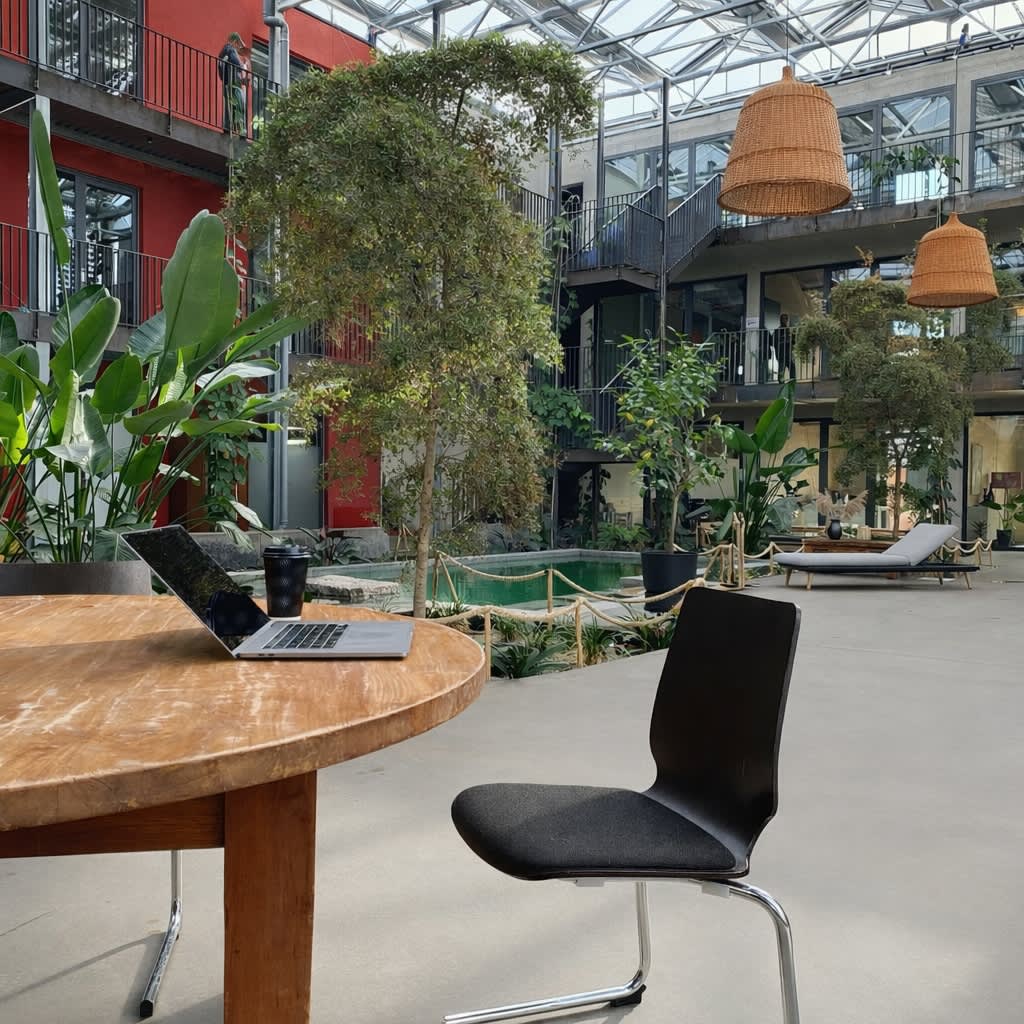
At Innergarden in Schutterwald near Offenburg, you come by the day or on a flex-desk plan, work in the green with a natural pool and fiber, and head home earlier and more relaxed.
Frequently asked questions
How long is the trip from Strasbourg to the Ortenau?
Depending on destination and traffic, often 15 to 30 minutes over one of the Rhine bridges. Innergarden in Schutterwald is about 20 minutes from Strasbourg.
Can a coworking space replace the commute?
On remote days, often yes: instead of driving to the company office, you work at a quiet place near the border – shorter trip, same productivity.
Is a day pass worth it for commuting?
If you only need a workspace on certain days, yes. A day pass is flexible and contract-free – you only pay for the days you use.
Takeaway
Commuting doesn't have to be the most draining part of the day. Designing your trip deliberately and spending remote days on the German side wins back time and calm – and you arrive more relaxed at work and at home.
Source
Shorten the long commute on some days? Try Innergarden for a day, free.
Request a trial day →Read next